A.I. in the Automotive Industry
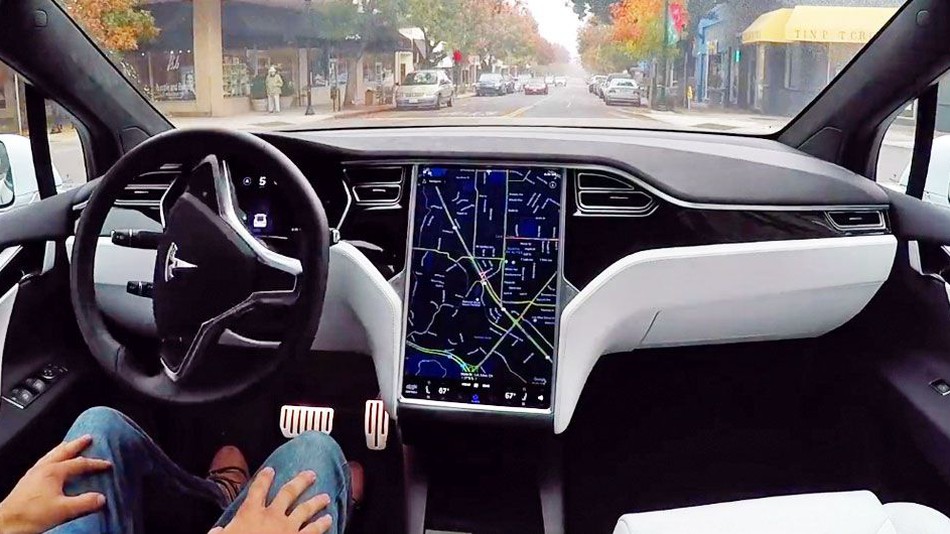
Artificial intelligence is becoming more prevalent with the uprising of deep machine learning and advancements in technologies, especially in the automotive industry. Autonomous cars are becoming a reality. The term artificial intelligence was first coined in 1956 by John McCarthy (Forbes.com, 2018) is now defined as “The theory and development of computer systems able to perform tasks normally requiring human intelligence, such as visual perception, speech recognition, decision-making…” (Oxford Dictionaries | English, 2018). An autonomous car is defined as a vehicle capable of sensing its environment and navigating without human input. (S. K. Gehrig and F. J. Stein,1999). Current manufacturers such as Audi, Toyota, Tesla, Volvo, BMW, Honda, Skoda and more are already working with developers to bring autonomous cars to the forefront of the industry.
History of A.I. in the Automotive Industry
The dream of the automated driver started in 1920’s America when the first radio controlled test car was developed and driven down a street. (News.google.com, 1926) Since then, America has been leading the forefront of innovation in Artificially Intelligent cars, from research starting on the logic behind the required logic and intelligence in the early 1970’s. In recent history the first intercontinental land journey completed by a driverless car was completed in 2010, led by Alberto Broggi of the University of Parma. The trip was over 15,000kms from Italy to China. (Mail Online, 2018). This demonstrates the rapid development and advancements made in this area of the automotive industry.
Software technologies such as detection/classification, map localization, pathway planning and vehicle control are currently under development by companies such as Nvidia. This software and corresponding cloud databases will fuel the drive towards automation, with constant testing and refinement. The software is additionally supported by hardware in the form of sensors, cameras and GPS technologies.
See the below video for a demonstration of this technology at work:
Impact on Society
Autonomy in cars has the potential to drastically reduce the number of road accidents through advance sensors and accident risk assessment, already available in some vehicles. With self-driving cars becoming main stream, not only will passengers feel safe, but also more comfortable by enjoying the freedom of a machine learnt scheduling and mapping system. From a business and economic standpoint, if automated cars are fully adopted, they have the potential to drastically affect the economy. Current industry leaders would either adopt, or suffer the consequences, including loss of market share and investor funding. This would also promote the growth of smaller more niche manufacturers, growing the competition and lowering the barriers of entry with the open patent and source coding of some of the needed technology.
Disruptive technology as defined by Armstrong is an emerging technology that has the speed and totality for true disruption, in terms of current industries. I believe this is correct about artificial intelligence in the automotive industry. The impacts on the society, the economy and the development of new politics surrounding this technology has the capacity to revolutionize the industry. Whilst other disruptive technologies do not reach full potential or only make fleeting appearances, I believe it is still necessary for the growth and innovation for any technology.